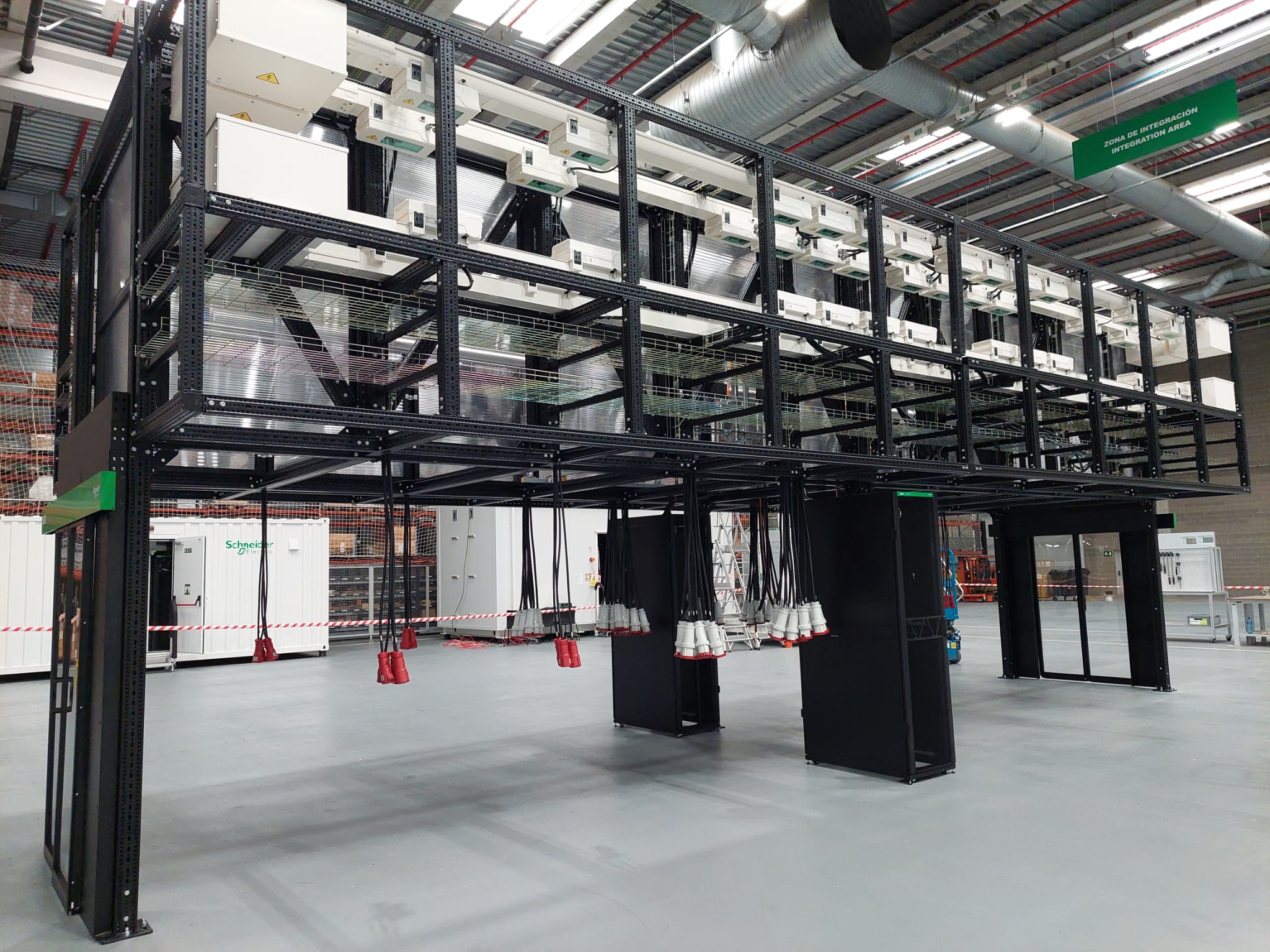
Modular data centres used to treated as an edge case tool for remote deployments or temporary capacity, while hyperscale infrastructure remained rooted in bespoke, stick built construction – not any more – that model can no longer keep pace.
Schneider Electric’s RapidScale Modular Data Center Reference Design 115 – purpose built for the NVIDIA Vera Rubin platform – tackles the industry’s sharpest delivery challenge: how to bring high-density AI capacity online quickly amidst skilled labour shortages and grid constraints.
Industrialising AI Capacity
Schneider projects global data centre capacity to grow by 170 GW by 2030, reaching 300 GW – more than double the 2025 base, with AI driving roughly 65% of that demand. Supporting platforms like Vera Rubin requires intricate liquid cooling and smart thermal controls that are notoriously slow to integrate from scratch on a traditional construction site – packaging power, liquid cooling, IT space, and lifecycle software into a pre-engineered blueprint shifts the sector from custom construction to repeatable industrial manufacturing.
Hard metrics over hype
The business case is backed by White Paper 238, a joint time study with hyperscale developer Compass Datacenters evaluating prefabricated IT pods in a high density, liquid cooled build. Moving assembly and verification into a controlled factory cut onsite installation from 75.5 hours to just 15 hours per pod – an 80% reduction.
“The white space brings together the greatest concentration of systems and trades in the smallest footprint, with each installation dependent on the one before it,” says Adil Attlassy, Chief Technology Officer at Compass Datacenters. “Working jointly with Schneider Electric, we engineered a prefabricated module that integrates these systems into a single assembly, eliminating the need to coordinate multiple scopes of work onsite. By reducing onsite installation time by 80%, we accelerate deployment and help our customers bring their workloads online sooner.”
Vertical integration as risk management
A reference design only matters if the hardware arrives on schedule. Unlike integrators stitching together third party gear, Schneider Electric manufactures roughly 90% of the equipment in its RapidScale portfolio in house. Backed by a fourfold manufacturing expansion since 2025 which now spans 1.35 million square feet across eight primary sites, this vertical integration removes critical supply chain risk for operators committing vast capital to AI factories.
“As AI infrastructure scales at unprecedented speed, customers need solutions that are standardized, reliable, and deployable with certainty,” says Manish Kumar, Executive Vice President, Secure Power & Data Centers at Schneider Electric. “Through our portfolio of reference designs and prefabricated solutions, combined with global supply chain strength and lifecycle expertise, we help AI factory operators accelerate time to value while building the resilient infrastructure required for next-generation compute.”
The European outlook
While Reference Design 115 launches with ANSI validation for North America, Schneider’s commitment to extending the framework to IEC standards will be closely watched by European operators navigating strict regulatory and power hurdles. The race is on to deploy reliable, liquid-cooled megawatts the fastest – with RapidScale, have Schneider Electric just handed operators a proven, factory built playbook to do just that?