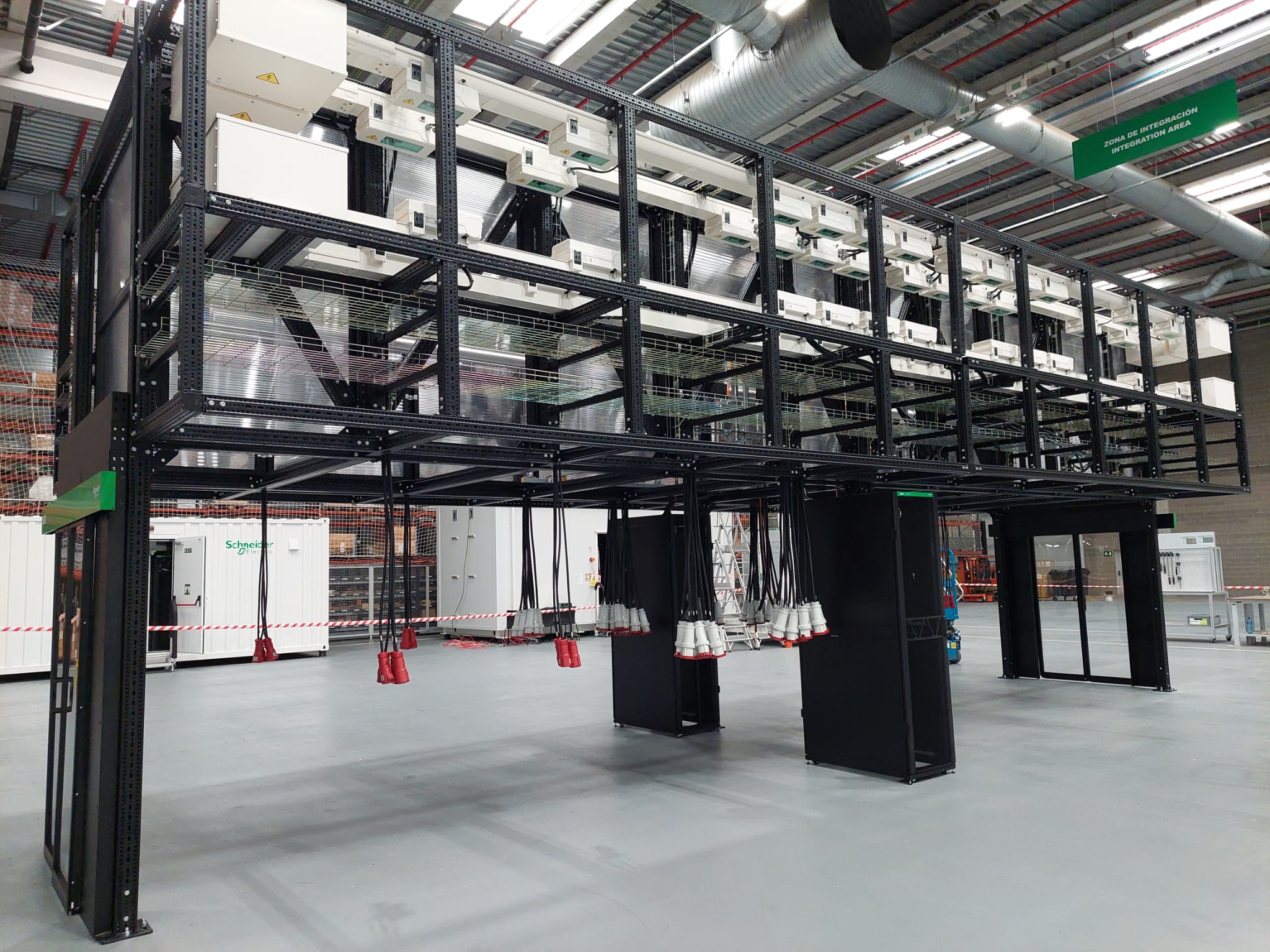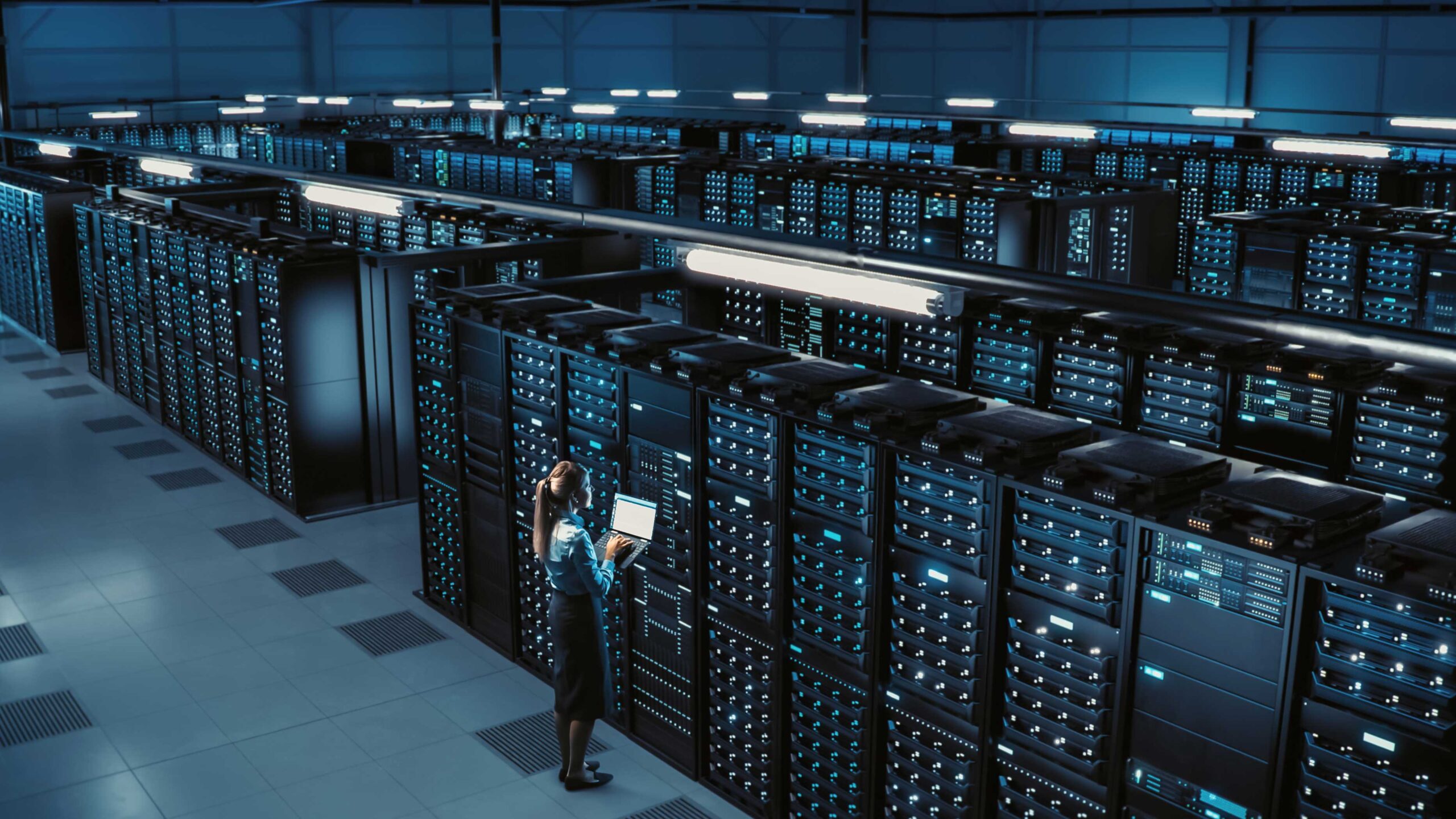
Schneider Electric, AVEVA, ETAP, Nscale and Start Campus have piloted an integrated digital twin at Portugal’s Sines data centre campus and the significance goes beyond visualising an AI factory – it points to a more fundamental shift in how operators should design, validate and upgrade infrastructure: power, cooling and compute need to be engineered as one system, before expensive decisions become physical commitments.
The cost of getting an AI factory wrong is rising
The next generation of AI data centres is being designed around extraordinary levels of compute density, power demand and thermal complexity but the industry still faces a familiar problem: decisions about the building, electrical infrastructure, cooling plant and IT equipment are often made across different engineering disciplines, organisations and software platforms, and those decisions eventually converge in the same physical facility.
A change in rack density affects electrical distribution, electrical loading influences heat generation, heat generation changes the demands placed on liquid cooling systems and a new generation of GPU hardware can alter the assumptions on which the original infrastructure design was based. If these relationships are not understood early, the consequences can include redesign, procurement changes, commissioning delays and expensive modifications after installation – this is precisely why the pilot deserves some attention.
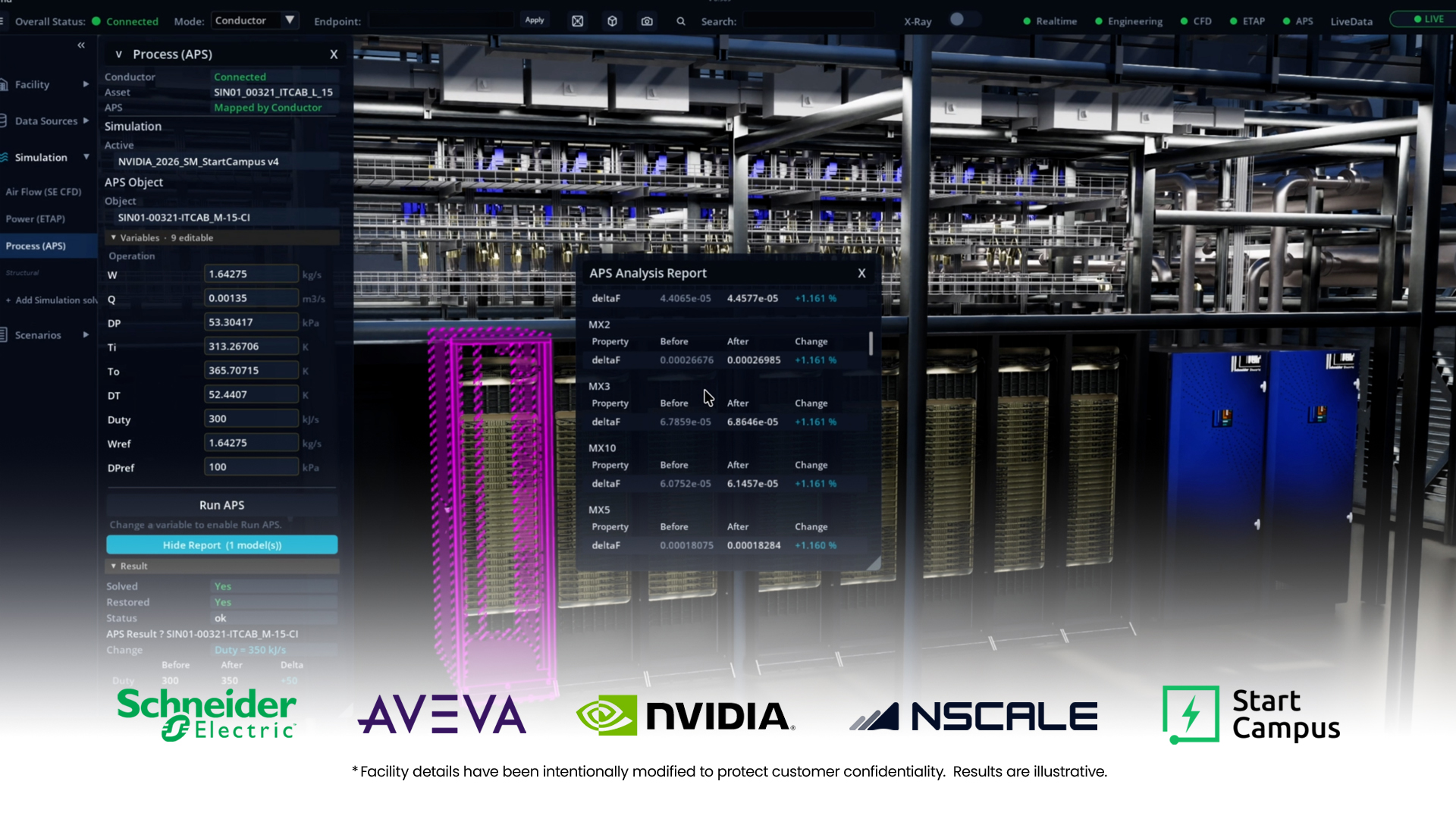
The project brings together engineering and operational data, electrical and cooling simulations, and AI workload requirements in a shared digital environment based on NVIDIA’s Omniverse DSX Blueprint. It’s purpose is to allow teams to test different configurations and assess their impact before implementing changes in the physical data centre.
The important development is not that a data centre can be represented in 3D – It’s that different engineering disciplines can begin working from a common model of how the infrastructure is expected to behave.
A shared model could change the relationship between operator and customer
The pilot is focused on Nscale’s operations at SIN01, within Start Campus’s Sines Data Campus in Portugal. Start Campus CEO Robert Dunn made an important point in the announcement: operators and customers design, develop and operate data centres best when they work from the same model – this observation gets to the heart of the challenge.
Historically, the developer, operator, engineering contractor, power and cooling suppliers, and customer may each work with different representations of the same facility – even where the information is technically accurate, differences in design versions, assumptions and data ownership can create friction. A shared digital model offers the possibility of agreeing the configuration before it is built.
Dunn describes using simulation to understand how increased rack density affects the power train and liquid cooling loop, allowing the parties to test new hardware generations and agree configurations before physical installation. His phrase, “build it once”, is particularly relevant.
For an industry under pressure to bring capacity online quickly, avoiding a late stage redesign could be as valuable as improving the efficiency of the equipment itself.
The real value is in connecting power, cooling and compute
The NVIDIA Omniverse DSX Blueprint provides a framework for building digital twins using OpenUSD and simulation ready equipment assets. NVIDIA’s documentation describes a system that can bring together electrical, thermal, network and operational simulations, with engineering data connected to the assets represented in the digital environment.
In the Schneider Electric and AVEVA implementation, the technology connects several important capabilities:
- Electrical modelling: ETAP supports analysis of electrical configurations and loading.
- Thermal and cooling simulation: engineering models help assess how equipment and workloads affect thermal conditions.
- Process simulation: AVEVA software connects engineering and operational information.
- Workload context: Nscale’s IT requirements can be considered alongside the physical infrastructure.
- Scenario testing: proposed changes can be evaluated before they are implemented on site.
This is where digital twins can become particularly valuable to AI infrastructure.
A GPU upgrade should not be treated as an isolated IT decision – it can change rack power demand, cooling requirements, electrical loading and the operating envelope of the wider facility. Likewise, a change to the cooling architecture needs to be evaluated against the actual compute configuration it is expected to support.
The objective here is to understand the consequences of a decision across the entire system, rather than discovering those consequences during commissioning or live operation.
A pilot is not yet proof of operational savings
There is of course an important distinction between demonstrating a successful digital twin pilot and proving measurable improvements in a live AI factory. The announcement describes the ability to model scenarios and identify opportunities to improve infrastructure performance – Nscale expects benefits including faster time to token, improved token efficiency, greater flexibility and reduced operational risk – we will have to wait for results showing how much energy has been saved, how much deployment time has been reduced, and how many additional tokens are being generated as a direct result of the pilot, as those are the measures that will ultimately determine the value.
There is also a difference between a detailed digital representation and a dependable operational twin – the latter needs accurate asset information, reliable telemetry, consistent data updates and simulation models that reflect how the physical infrastructure actually behaves. A model that is not updated when equipment changes, or that relies on incomplete operating data, can become less useful over time. Operators will need confidence that the virtual environment remains aligned with the physical facility.
Interoperability is another test; OpenUSD provides a common framework for representing and exchanging digital assets, but genuine interoperability depends on the quality of the underlying data, consistent engineering definitions and the ability of different systems to exchange information reliably. So we should look beyond demonstrations and wait to see whether the model can support repeatable engineering decisions throughout the facility lifecycle.
The Sines project shows why this matters now
The scale of the Sines development illustrates the stakes.
Start Campus describes the wider SINES Data Campus as a 1.2GW development. Nscale has separately announced plans for more than 66,000 NVIDIA Rubin GPUs at the site, with deployment expected to begin in late 2027. It’s earlier announcement also outlined an initial deployment of more than 12,600 Blackwell Ultra GPUs. These are planned deployment figures, not evidence that all 66,000 Rubin GPUs are already installed and operational. At this scale, the ability to evaluate infrastructure changes before committing to physical installation becomes increasingly important.
A new accelerator generation, a different rack configuration or a revised cooling design can have consequences across a large electrical and mechanical system so modelling those interactions in advance could help reduce uncertainty and make future upgrades more predictable. It also raises a broader question for the industry: should a validated digital twin become a standard part of the handover between data centre developer, operator and customer?
If the model is to remain useful beyond construction, it needs to become part of the operational asset and not simply a design stage deliverable.
The next competitive advantage may be engineering certainty
AI infrastructure is moving too quickly for operators to rely entirely on static designs and fragmented engineering workflows. The physical facility must accommodate successive generations of hardware, changing workload profiles and increasingly demanding power and cooling requirements – the ability to test those changes virtually, understand their consequences and agree the response before implementation could become a meaningful competitive advantage.
The industry will judge digital twin projects by what they can deliver; Can they reduce redesign? Can they shorten commissioning? Can they predict the impact of a hardware upgrade accurately? Can they demonstrate improvements in power utilisation, cooling performance and tokens per watt? And can the model remain reliable as the facility changes?
There is no doubt that Schneider Electric, AVEVA, ETAP, Nscale and Start Campus have taken a very useful step forward by bringing these disciplines together in a real AI infrastructure environment – the next challenge is to demonstrate repeatable, measurable results.
AI factories of the future won’t be designed by power engineers, cooling specialists and IT teams working in isolation, they will be modelled, tested and agreed as one integrated system, before the first rack is installed and the first megawatt is committed, so the direction of travel is right.