By Venessa Moffat, Managing Director The DCA
The UK wants to be an AI superpower. Yet we are trying to build a digital future on aninfrastructure system that is struggling to support the present. We have the ambition, the expertise, the investment appetite and the demand. What we lack is a joined-up way to turn them into delivery.
Ambition is not infrastructure
AI does not live in the cloud. It lives in buildings, connected to electricity networks, fibre and water systems. Those buildings need planning permission, equipment and people. Announcing an AI strategy is considerably easier than delivering a transmission line or securing a credible energisation date
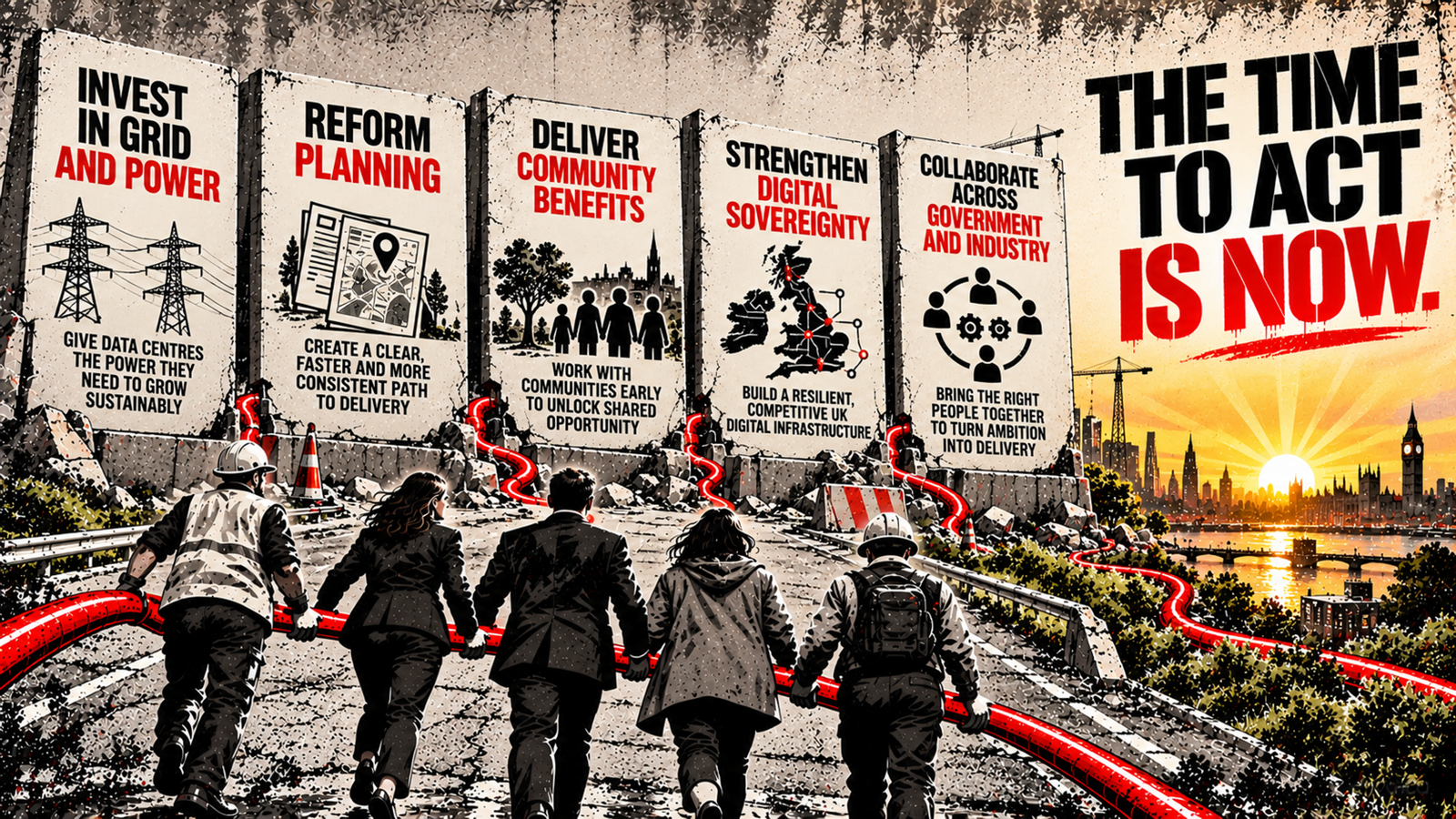
There is progress: developers are exploring energy campuses, storage, on-site generationand flexibility. NESO offers the prospect of more strategic planning. Yet connection uncertainty, limited queue transparency and fragmented policy continue to undermine investment confidence. Digital policy cannot sit in one department while energy, planning and infrastructure policy pull in different directions. The UK needs a national digital infrastructure strategy, with government, regulators, network operators and industry working to a common plan.
Sovereignty is not a wall
Before we race to become an AI superpower, we should decide what winning means. The UK does not need to own every layer of the AI stack or manufacture every chip. We need to identify what we cannot afford to lose control of, where domestic capability is essential and where trusted partnerships make us stronger.
That means looking seriously at Europe. We share dependencies, vulnerabilities and strengths. Mapping capabilities across the UK and Europe would show where to invest, where to collaborate and where the gaps really are. Sovereignty should mean strategic control, not technological isolation.
Planning permission is not public permission
Data centres are becoming more visible, and communities are asking legitimate questions about power, water, land, noise and local benefit. We should answer with evidence, not defensiveness. If we use relatively little water, publish the figures. If we promise jobs or investment, explain precisely what that means.
It hardly helps that our planning system can still treat a data centre much like a warehouse. A distinct planning classification would support more consistent assessment and a more informed public conversation. The DCA’s community benefits work shows what good practice can look like, from education and skills to locally relevant investment. Benefits should respond to the place, not the press release.
Strategic importance brings responsibility
It is easy to tell government what it must fix. Our industry has obligations too. We need to publish credible information on energy, water, emissions and economic contribution; engage communities before designs are effectively settled; use resources intelligently; and distinguish deliverable projects from speculative demand.
We should be better grid citizens and better neighbours. We should help shape proportionate regulation rather than pretend it is not coming. Being recognised as critical national infrastructure is not simply a badge of importance. It is a standard of behaviour.
From talking to doing
These are not separate problems. Power influences location. Location affects communities. Planning determines delivery. Sovereignty shapes what we build and where. None can be solved in isolation.
Government must connect its policies. Regulators and networks must provide credible certainty. Industry must become more transparent, collaborative and accountable. The DCA can help bring those conversations together, but conversations alone will not build a single megawatt.
We do not need another explanation of why we cannot. It is time to work out how we can.

Managing Director, The DCA