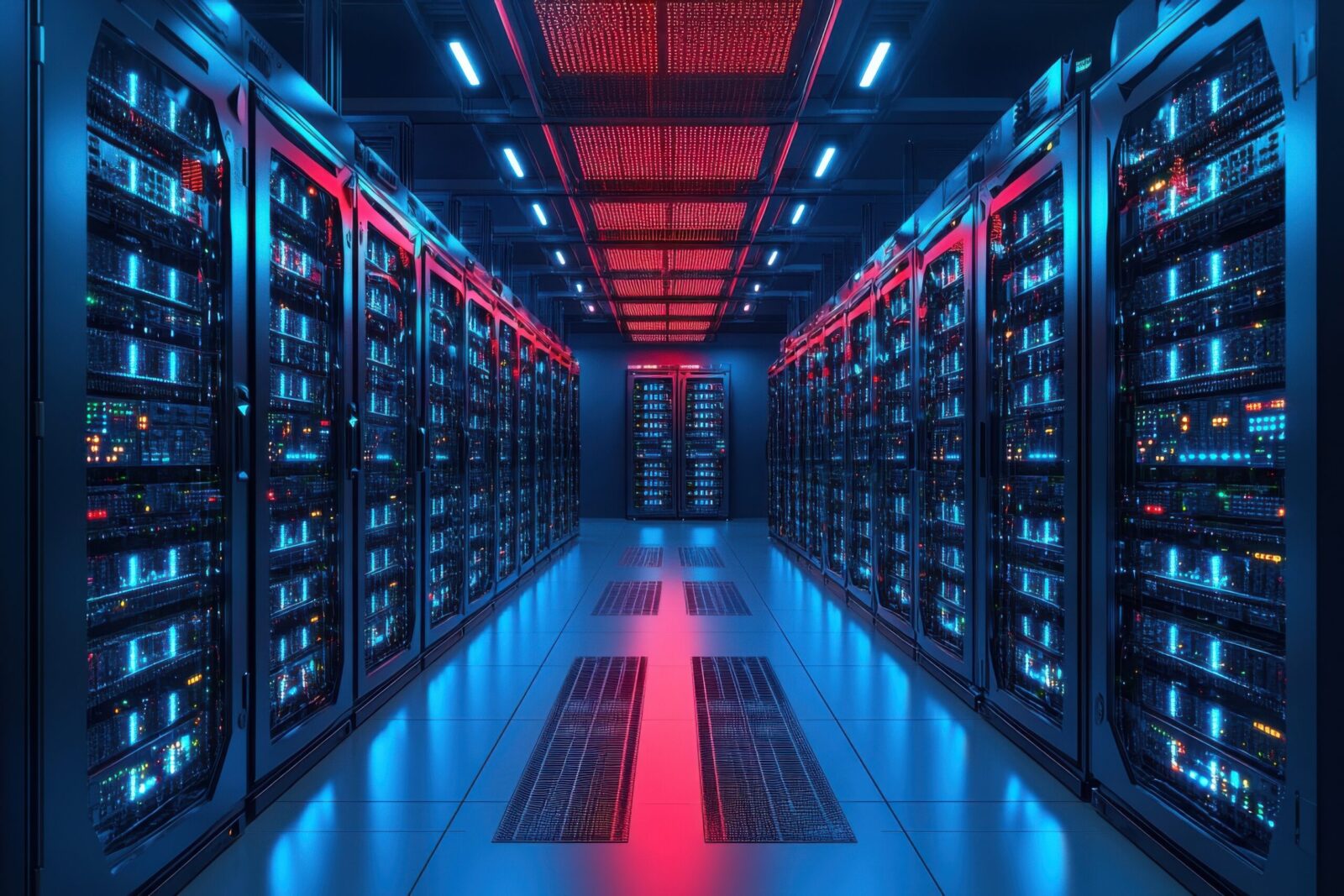
The Modern data center is running out of thermal and electrical headroom
While multibillion investments are pouring into grid substations and mega-scale power generation, an equally fierce optimisation battle is taking place within the facility itself, specifically across the final hundred metres between the grey space and the server rack.
As next-generation artificial intelligence hardware pushes thermal design power to unprecedented heights, Swiss engineering giant ABB officially launched Infinitus. The system is touted as the industry’s first integrated, source-to-rack direct-current (DC) power portfolio explicitly engineered to overhaul power delivery in artificial intelligence data centers. By rewriting legacy power layouts, the platform targets the systematic energy losses inherent in traditional alternating current (AC) designs.
The fundamental catalyst driving this shift is a profound change in rack-level density
Today’s standard high-performance computing and AI clusters can draw close to 200 kW per rack. However, the next generation of accelerated AI chips is projected to demand 1 MW per rack and beyond – a staggering fivefold increase that pushes copper conductors and step-down systems to their absolute physical limits.
Under conventional data center designs, power from the utility grid enters as AC, is converted to DC for battery backup storage, inverted back to AC for distribution through the facility, and finally converted back to DC inside the server’s power supply unit – every single conversion stage generates heat, introduces component failure points, and degrades overall system efficiency. Infinitus bypasses this cycle entirely by shifting the primary distribution layer to an 800 VDC architecture. Distributing power at 800 volts of direct current allows for higher power transfer at a lower current. This reduces conductor mass, slashes thermal losses, and eliminates redundant power conversion steps. At the heart of this deployment is ABB’s breakthrough solid-state transformer (SST) technology, which replaces conventional copper and iron transformers with electronic switching components to radically shrink the physical infrastructure footprint.
During the product unveiling, Giampiero Frisio, President of the Electrification Business Area at ABB, framed the platform’s role in the wider market: “We are working closely with chipmakers, hyperscale customers, supply partners and industry bodies to set the standards and the pace for the roll-out of high-efficiency DC architectures”
The operational economics behind the shift are compelling
According to a joint impact study conducted by ABB and the Boston Consulting Group (BCG), implementing source-to-rack DC distribution delivers a baseline energy efficiency improvement of more than 5%. For a 500-megawatt hyperscale data center facility, a 5% optimisation frees up roughly 25 megawatts of raw capacity. Rather than losing that energy to heat dissipation, operators can route it directly to active IT workloads, potentially unlocking hundreds of millions of dollars in additional computing revenue over a facility’s lifecycle. The platform launch also solidifies ABB’s ongoing development initiatives with NVIDIA, focused on tailoring 800 VDC power architectures directly to gigawatt-scale AI infrastructure.
Infrastructure planners must, however, note the rollout timelines; ABB expects several of its core Infinitus building blocks -which span medium voltage powertrains, distribution blocks, and specialised cooling optimisation systems – to enter standard production over the next 12 months. The company estimates that the first fully DC-native facilities using the complete end-to-end framework will be active and operational within two to three years.
Why this matters to data center operators.
For infrastructure executives navigating the sheer density constraints of the AI buildout, the arrival of source-to-rack DC introduces three critical strategic shifts:
- Unlocking Stranded Power: In a market where securing additional grid capacity can take years, a 5% systemic efficiency gain means operators can cram more GPUs into their existing footprint without requesting a single extra watt from local utilities.
- Mitigating White Space Crowding: Next-generation AI server rooms are space-starved due to the massive footprints required for liquid-cooling pump blocks and heavy manifold tracking. By using solid-state electronics to eliminate bulky AC transformers and multi-stage switchgear, Infinitus dramatically shrinks the grey-space footprint, freeing up premium real estate for compute racks.
- The Looming Standardization War: DC distribution architectures can only truly scale if chipmakers, server manufacturers, and power equipment vendors agree on unified voltages and electrical interfaces. ABB’s push for an 800 VDC baseline—heavily backed by its work with NVIDIA and alignment with the Open Compute Project (OCP)—signals that operators must begin designing current facility roadmaps around these emerging high-voltage standards.
The International Energy Agency (IEA) projects that global data centre electricity demand will more than double by 2030. ABB’s internal modeling suggests that anywhere from 25% to 40% of all new capacity installed by the turn of the decade could rely on DC distribution. Infinitus proves that power optimization is no longer just about building cleaner generation upstream; it is about eliminating the silent, margin-killing inefficiencies buried deep within the server room floor.